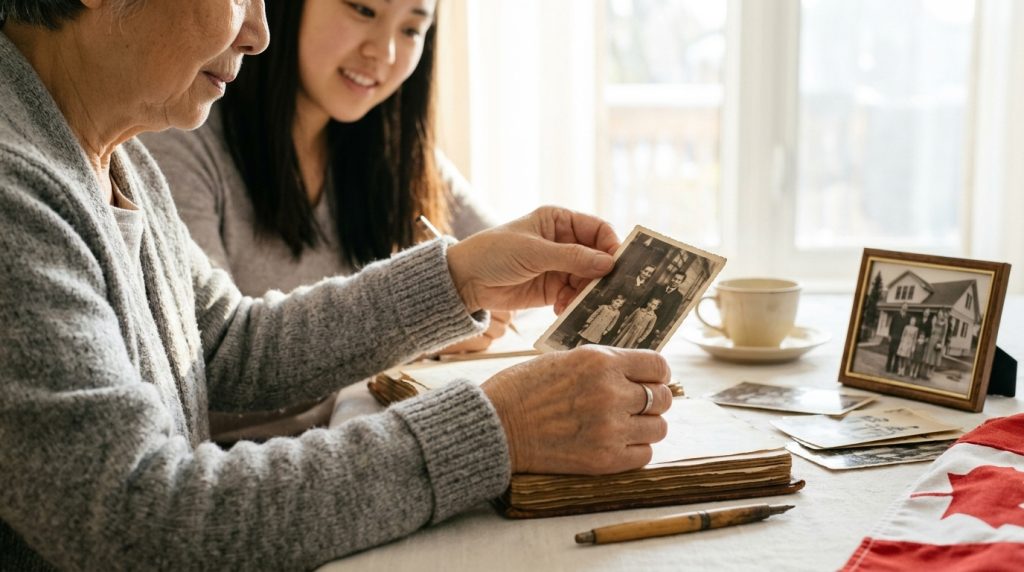
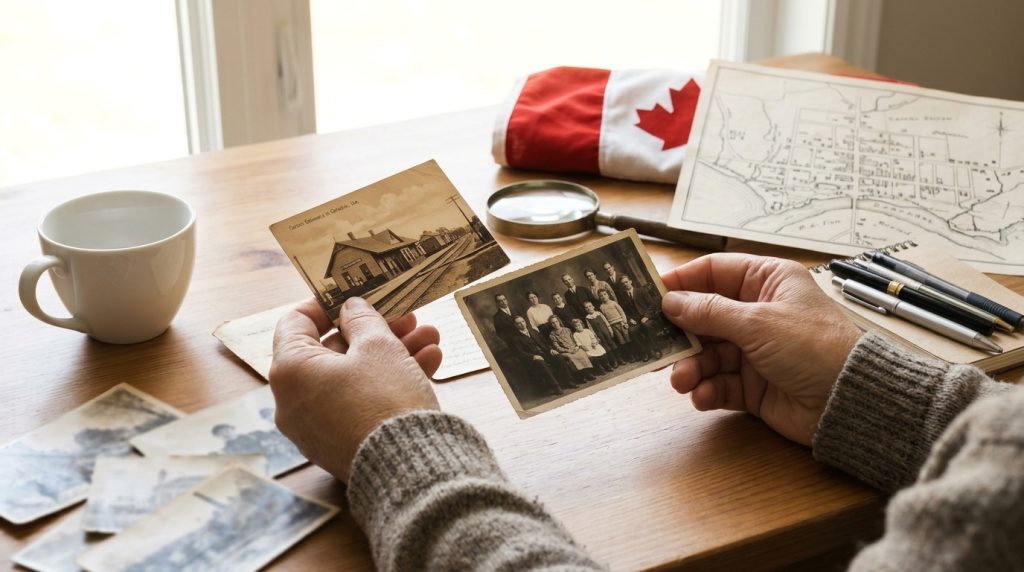
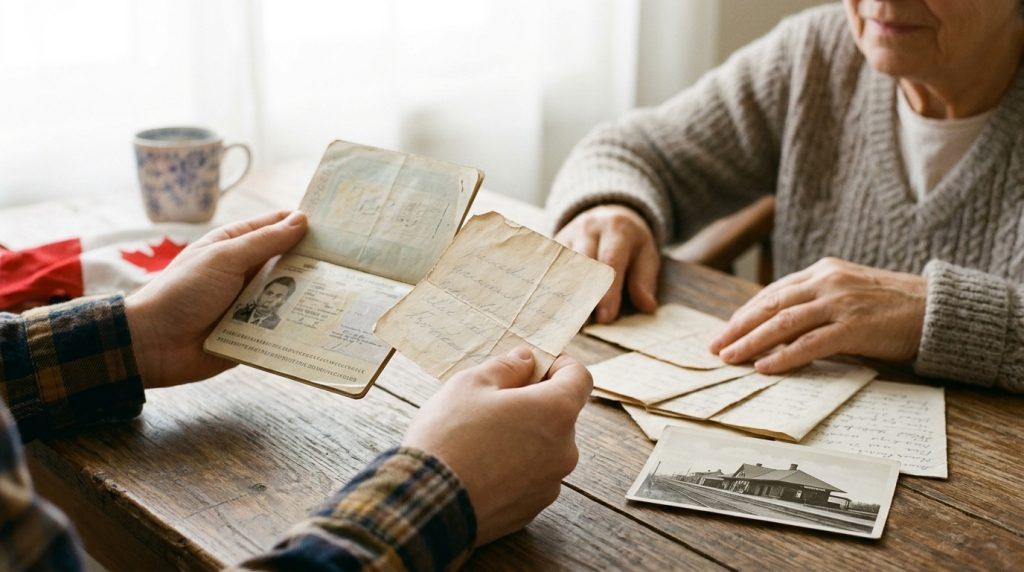
A new surname-search tool is drawing attention to an unusual citizenship question: could some people already be Canadian without knowing it? By checking family names, places, and historical records, the tool offers clues about possible Canadian ancestry. For families with roots in New England and old French-Canadian or Acadian communities, those clues may be worth exploring carefully.
A newly launched online tool is encouraging people to take a closer look at their family history after recent changes to Canadian citizenship by descent rules. The tool, called the Canadian Ancestry Explorer, is designed to help users see whether a surname and family location may point to historic Canadian roots.
For some families, especially in the United States, this matters more than it once did. Since changes linked to Bill C-3 took effect in late 2025, certain people born before that date may already have a claim to Canadian citizenship through a direct ancestral line. In these cases, the issue is not applying to become Canadian in the usual sense. Instead, it may be a matter of proving that citizenship already exists under the law.
That distinction is important. People exploring ancestry are dealing with citizenship law, family records, and documentary proof, not the regular immigration to Canada process. Still, for many families, ancestry research becomes part of a larger plan to explore Canadian immigration options, including permanent residence, work permits, or future settlement in Canada.
Why this ancestry tool is getting attention
Citizenship by descent has become more relevant
The main reason for the growing interest is the expansion of citizenship by descent rules. According to the article, if a person was born before December 15, 2025, and can show an uninterrupted line from a Canadian ancestor to themselves, they may already be a citizen. There is no fixed limit on how many generations back that ancestor could be, as long as the direct line can be documented.
That means a Canadian-born parent, grandparent, great-grandparent, or even an earlier ancestor could matter. The key point is that the connection must be direct. A cousin, aunt, uncle, or sibling may share the same family history, but they cannot pass citizenship to someone else.
This is very different from economic pathways such as Express Entry immigration to Canada, or regional options like the Atlantic Immigration Program. In ancestry-based citizenship matters, the focus is not on CRS points, age, language test scores, or work experience. Instead, the focus is on lineage and proof.
Many families may have hidden Canadian roots
The article highlights a major historical trend: from about 1840 to 1930, very large numbers of Canadians moved to the United States. Many settled in New England mill towns and industrial centres, while others moved to states such as New York, Michigan, and Minnesota. Over time, their descendants often lost track of where the family originally came from.
Names also changed. French-Canadian and Acadian surnames were sometimes simplified or anglicised after migration. Because of this, a current family name may only be a clue, not proof. Still, a surname linked to a known migration pattern can be a useful starting point for research.
How the Canadian Ancestry Explorer works
A simple starting point, not a legal decision
The tool is built as a first-step research aid. Users enter one surname and can then add a few optional details about how that name connects to their family, where that branch of the family lived, and whether there was an older spelling used in earlier generations.
The article explains that only the surname is required. The extra details simply help the tool give more focused results. That makes it accessible for people who know only a little about their family history.
What information the tool looks at
The results are based on historical and genealogical sources, including parish records from Quebec, Acadian family references, surname studies, and material from genealogy organisations. The tool then gives a summary explaining why the surname may be relevant and where the information came from.
At this stage, the database is centred mainly on French-Canadian and Acadian names, along with some English spellings that developed later. That means a missing result does not prove there is no Canadian ancestry. It may simply mean the surname has not yet been fully researched in the system.
Users can also save or print the summary, which may help when speaking with relatives or beginning a document search. For people who later decide to move to Canada through an economic or family route, it can also be useful to compare ancestry-based possibilities with other Canadian immigration programmes.
What the results really mean
Three levels of surname clues
The article says the tool places researched surnames into one of three broad categories. These labels do not confirm eligibility. They simply describe how strongly a surname appears in the historical Canadian record.
- Strong surname clue: the name has deep and distinctive roots in historical Canadian communities.
- Supporting surname clue: the name has a documented Canadian connection, but it may be less specific.
- Clue needing family context: the name appears in Canadian history, but it is also common in other populations, so family details matter much more.
This is a useful distinction because many surnames are shared across countries. A common name on its own may say very little. But if that same name appears in a family branch that lived in New Hampshire, Maine, Vermont, or another migration area during the right period, the lead becomes more meaningful.
Context can strengthen the lead
The article notes that a surname result may become more persuasive when paired with historical family context. For example, a surname with strong French-Canadian roots combined with evidence that the family lived in New England during the major migration period may point to a stronger combined lead.
However, the tool does not count everything as evidence. A current place of residence does not help. A surname gained only through marriage does not establish ancestry. The emphasis remains on biological descent and historical records.
This is similar to other areas of Canadian immigration law, where evidence matters more than assumption. Whether someone is applying under the Federal Skilled Worker Program, seeking points under the Comprehensive Ranking System, or trying to prove citizenship by descent, documents are central.
What families should do next
Move from clue to proof
A surname search is only the beginning. To establish citizenship by descent, a person must show documents linking each generation from the Canadian ancestor down to themselves. That can include birth certificates, marriage records, baptism entries, old civil registrations, and other official documents.
In practice, families often start by asking older relatives what they remember. A grandparent may know an original surname spelling, a town in Quebec, or a story about a move from Canada to a U.S. mill town. Those small details can make a major difference.
If a person already knows the identity of a Canadian ancestor, the next step is usually to map the family line carefully and test whether every generation can be documented. This kind of work is very different from applying for permanent residence in Canada or submitting a profile under Express Entry, where applicants often focus on IELTS, CELPIP, TEF, TCF, education assessments, and job history.
Some people may still need another pathway
Not everyone who explores ancestry will be able to prove a citizenship claim. Some will find promising clues but incomplete records. Others may discover that the family connection is outside the direct line. In those situations, regular immigration pathways may still be the better option.
Depending on a person’s background, that could include federal economic streams, provincial nominations, work permit options, or study routes that later lead to permanent residence. People who are unsure where they fit can determine their eligibility through a free immigration assessment and compare ancestry questions with practical modern pathways.
For example, a person who cannot prove citizenship by descent may still qualify through skilled worker selection, a provincial stream, or Canadian work experience. Others may need guidance on language testing, ECA requirements, or how to improve a CRS score for Canada. In that sense, ancestry research can be one part of a broader settlement strategy rather than the only answer.
Immigration rules and citizenship requirements can change quickly, so readers should always confirm current information with IRCC or seek advice from a licensed immigration professional before making decisions. EverNorth Immigration is here to help with experienced, compassionate support at every stage of your journey toward a new life in Canada, whether you are exploring ancestry, permanent residence, or another pathway. If you would like tailored guidance, you can book your free immigration assessment.