

This comprehensive guide explains everything you need to know about the Educational Credential Assessment (ECA) for Canadian immigration. Learn how ECAs work, which designated organisations to choose, required documents, tips for Express Entry, and how to ensure your foreign degree is recognised in Canada.
Understanding the Educational Credential Assessment (ECA) for Canada
For many skilled workers hoping to move to Canada, an Educational Credential Assessment is one of the first and most important steps in the immigration process. Whether you are applying through Express Entry, a Provincial Nominee Programme (PNP), or planning to build a long-term future in Canada, an ECA ensures your foreign education is recognised as equivalent to a Canadian credential.
Immigration, Refugees and Citizenship Canada (IRCC) uses an ECA to confirm the authenticity and value of your academic qualifications. It helps determine your points under the Comprehensive Ranking System and can greatly affect your overall eligibility to immigrate under the Express Entry system.
If you are just getting started with your application, you can also take advantage of a free immigration assessment to determine your eligibility and understand how your education will impact your Canadian immigration options.
What Is an Educational Credential Assessment?
An Educational Credential Assessment is an official evaluation of your foreign diploma, degree, or certificate to determine its Canadian equivalency. In simple terms, it answers the question: “How does your international education compare to a Canadian standard?”
Your ECA report will tell IRCC whether your education is equivalent to:
- A Canadian high school diploma
- A Canadian post-secondary certificate
- A Canadian bachelor’s degree
- A Canadian master’s degree
- A Canadian PhD
The exact equivalency matters because it affects your Express Entry CRS points and eligibility for specific programs such as the Federal Skilled Worker Programme.
Why ECAs Are Required for Express Entry
An ECA is mandatory for applicants applying under the Federal Skilled Worker stream and optional but recommended for Federal Skilled Trades and Canadian Experience Class applicants. Even if your programme does not require it, having an ECA can increase your CRS score under the Express Entry pool. To understand how much your education can impact your score, you may explore the CRS system and compare possible point increases.
Your Express Entry profile is incomplete without an ECA if you are claiming education points based on a foreign credential.
Who Needs an ECA for Canadian Immigration?
You will need an Educational Credential Assessment if:
- You completed your education outside Canada
- You are applying for Express Entry under the Federal Skilled Worker stream
- You want to claim CRS points for foreign education
- You want to qualify for certain Provincial Nominee Programmes
Those who studied in Canada at a designated learning institution do not need an ECA for Canadian credentials. However, many applicants who completed their studies abroad still require an assessment to prove their academic background.
Do You Need an ECA for Every Credential?
Not always. IRCC requires an ECA only for your highest completed credential. For example:
- If you have a master’s degree, you do not need to assess your bachelor’s degree separately.
- If you have two bachelor’s degrees, assessing both may help you qualify for “two or more certificates” CRS points.
- If you have a PhD, you only need that credential assessed.
This decision can affect your CRS score and eligibility. If you are unsure about which credentials to evaluate, you can assess your immigration options with an expert who can help guide you.
Designated ECA Organisations in Canada
Not all organisations can issue an ECA. IRCC only accepts evaluation reports from a small number of designated bodies. The most commonly used assessment organisation is WES (World Education Services), but there are several options depending on your field of study and professional background.
1. WES (World Education Services)
WES evaluation is one of the most popular options due to faster processing times and a simple application process. Many skilled workers rely on WES for Express Entry, especially those with bachelor’s and master’s degrees. WES is widely used because:
- It offers transparent processing timelines
- It is commonly accepted by employers and regulatory bodies
- Its verification procedures are straightforward
For many applicants, WES for Express Entry remains the preferred choice because of its speed and familiarity among newcomers.
2. IQAS (International Qualifications Assessment Service)
IQAS evaluation is an alternative used by applicants whose institutions may have longer verification procedures. IQAS is managed by Alberta’s government and usually provides detailed reports that some applicants prefer.
While IQAS processing times may vary, it remains a reliable option for many professions and educational backgrounds.
3. ICAS Canada (International Credential Assessment Service)
ICAS Canada is another designated organisation used by foreign graduates. ICAS is popular among applicants who require more in-depth analysis of multiple credentials or have older educational records.
This organisation also provides assessments needed for certain jobs and regulated professions across Canada.
4. CES (Comparative Education Service – University of Toronto)
CES evaluation is conducted by the University of Toronto School of Continuing Studies. CES is known for producing well-detailed reports, especially for degrees coming from countries with specialised education systems.
Many applicants choose CES when their institution or study programme does not easily fit the standard evaluation categories used by WES or other organisations.
Other Designated ECA Bodies
IRCC also recognises ECA reports from:
- Medical Council of Canada (for physicians)
- Pharmacy Examining Board of Canada (for pharmacists)
These organisations are mandatory for those seeking licenses in their specific professions. Applicants who wish to practise medicine or pharmacy in Canada must use the appropriate body for their ECA.
How to Choose the Right ECA Organisation
Selecting the correct ECA body is one of the most important decisions you will make early in your immigration journey. Your evaluation result can impact your CRS score, your Express Entry profile, and your ability to work in your field once you arrive in Canada.
Key Factors to Consider
- Processing time
- Cost of evaluation
- Document requirements
- Whether your institution is recognised by the organisation
- Whether you need a specialised assessment for a regulated profession
Some organisations take longer to process results, which may affect your ability to enter the Express Entry pool quickly. If you want to move forward faster, you may prefer an organisation known for predictable timelines.
When Speed Matters
Applicants hoping to enter Express Entry quickly, especially those tracking recent Express Entry draws, often choose WES due to its efficiency. A faster ECA allows you to enter the pool sooner and become eligible for future invitations.
When Detail Matters
Some applicants—particularly those with unique educational backgrounds or multiple credentials—may prefer IQAS, ICAS, or CES. These organisations sometimes provide more detailed equivalency statements that may better support specific immigration strategies.
If You Plan to Work in a Regulated Profession
If your profession is regulated in Canada, such as healthcare, engineering, or teaching, you may need more than one assessment—one for immigration and one from your regulatory body. A professional immigration evaluation can help you determine whether multiple assessments are required.
Required Documents for an ECA: Checklist and Tips
Document requirements can vary depending on the organisation, but most designated bodies require similar basic documents. Preparing these documents early can significantly reduce delays in your evaluation.
Standard Document Checklist for ECA
- Degree certificates (diploma, bachelor’s, master’s, PhD)
- Official academic transcripts
- Identity documents (passport, national ID)
- Translation of documents (if not in English or French)
- Institution verification documents (sealed envelope or direct digital submission)
Some organisations require your school to send transcripts directly to the ECA body. Others allow students to courier sealed envelopes themselves. Make sure you follow instructions carefully to avoid delays.
Tips for Faster Processing
- Contact your school early to confirm transcript procedures
- Use courier services instead of standard mail
- Include your reference or application number on all envelopes
- Submit clear scanned copies when electronic uploads are allowed
- Ensure your name matches exactly on all documents
In many countries, universities take weeks to issue transcripts. Starting early helps avoid delays that could affect your Express Entry timeline.
When planning your overall immigration strategy, you can also explore your Canadian immigration options and understand how your credential evaluation fits into the bigger picture.
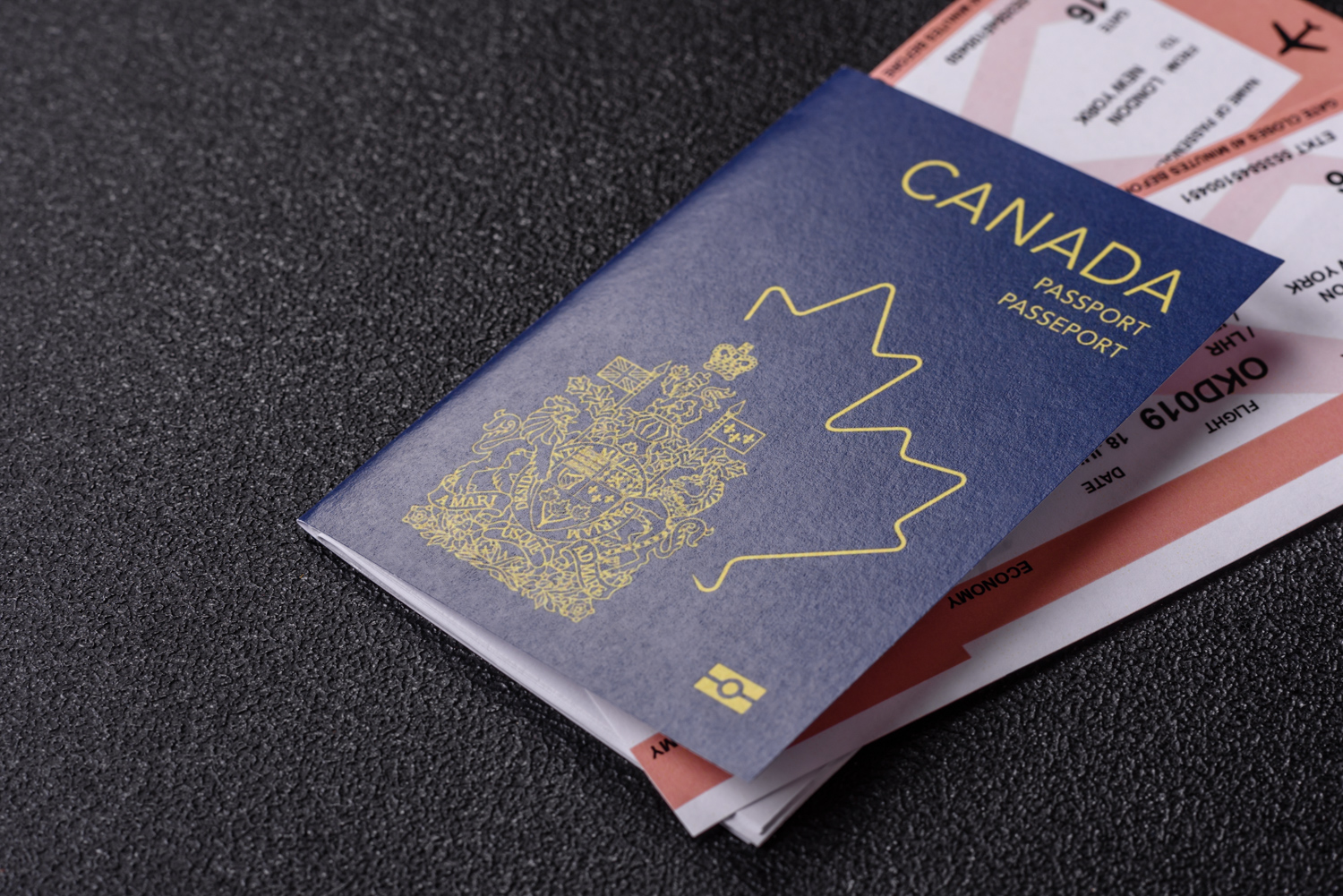
Step-by-Step Process: How to Apply for an Educational Credential Assessment
Once you understand what an ECA is and why it is important, the next step is to begin the application process. While the steps may vary slightly depending on the organisation you choose, the general procedure remains similar across WES, IQAS, ICAS Canada, CES, and other designated bodies.
Step 1: Choose Your ECA Organisation
Before creating an online account, you must decide which evaluation organisation is the best match for your situation. As explained earlier, WES is often preferred for speed, while organisations such as ICAS and IQAS may offer more detailed assessments for complex credentials.
If you are unsure which organisation to select, you can determine your eligibility with expert guidance to understand which evaluation will best support your Express Entry profile or overall immigration strategy.
Step 2: Create an Online Account
Once you choose an organisation, the next step is to create an online profile. You will be asked for basic personal information such as:
- Your full name
- Date of birth
- Mailing address
- Educational history
- IRCC reference number (if available)
Make sure the name on your application matches exactly with the name on your passport and educational documents. Even small differences—such as missing middle names or reversed surnames—can cause delays.
Step 3: Pay the Assessment Fee
The fee depends on the organisation and the type of evaluation you need. Most standard immigration-focused ECAs cost between CAD 200 and CAD 300, not including courier charges or additional services.
You may also choose express courier delivery to receive your official hard-copy report faster, especially if your country’s mail system is slow or unreliable.
Step 4: Submit Your Academic Documents
Submitting your academic records is the most important part of the process. Each organisation has specific rules on how transcripts and degree certificates must be provided.
Common Submission Methods
- Direct submission from your institution (most common)
- Sealed envelopes sent by the applicant
- Secure electronic submission via digital platforms
- Submission through authorised third-party services
Always follow the organisation’s instructions carefully. If your school sends documents incorrectly or uses unapproved delivery methods, your assessment may be delayed or rejected.
What If Your University No Longer Exists?
Some applicants face challenges when their institution has closed or merged with another school. In such cases, you must:
- Contact the education ministry responsible for your region
- Locate the institution’s successor organisation
- Request official verification from the authority holding archived records
This situation is more common in countries where reforms have reorganised colleges and private education centres. Organisations like ICAS and IQAS are often more flexible with historical records.
Step 5: Track Your Application Status
Most ECA organisations allow you to monitor your application online. You can check whether:
- Your documents have been received
- Your evaluation is under review
- Your report has been finalised
Processing times vary. WES typically completes assessments faster, while IQAS or CES may take longer due to more intensive verification procedures.
Step 6: Receive Your Final ECA Report
When your ECA is completed, you will receive:
- A digital copy accessible through your online portal
- A reference number to include in your Express Entry profile
- An official hard-copy report (if requested)
Your report will show the Canadian equivalency of your foreign credential, such as:
- Equivalent to a Canadian master’s degree
- Equivalent to a Canadian bachelor’s degree (four years)
- Equivalent to two or more Canadian post-secondary credentials
This equivalency directly affects your CRS score, which is used by IRCC to rank your profile in the Express Entry system.
How ECA Results Affect Your Express Entry CRS Score
Your ECA report plays a major role in determining your Comprehensive Ranking System score. For many applicants, education points make up a significant portion of their overall CRS score, especially when combined with language test results like IELTS, CELPIP, TEF, or TCF.
Understanding how your degree equivalency Canada impacts CRS points is essential for creating a competitive Express Entry profile.
ECA Points for Education
Under the Federal Skilled Worker Programme and other Express Entry categories, IRCC awards education points based on your highest completed credential.
For example:
- A high school diploma receives fewer points than a post-secondary credential
- A bachelor’s degree earns more points than a diploma
- A master’s or professional degree earns a significantly higher score
- A doctoral degree earns the highest possible educational points
If your ECA confirms equivalent Canadian education, you can claim these points in your Express Entry profile.
Bonus Points for “Two or More Certificates”
Some applicants mistakenly evaluate only their highest credential. However, evaluating multiple credentials may help you earn additional CRS points.
You may qualify for extra points if your ECA shows you have:
- Two post-secondary credentials, with at least one being a programme of three years or more
- Two bachelor’s degrees
- A bachelor’s degree plus a post-graduate diploma
These bonus points can be extremely valuable, especially if you are close to the cutoff scores in recent Express Entry draws.
Education Plus Language Synergy
IRCC awards extra points when your education level is combined with strong language results. This is known as “skill transferability.”
For example, if your foreign education is equivalent to a Canadian bachelor’s degree and your IELTS or CELPIP results show CLB 9 or higher, you may receive additional points that can significantly increase your CRS score.
If you want to understand how your ECA and language results work together, you can explore the CRS system and check how your score changes when you update different sections.
How Your ECA Affects Provincial Nominee Programmes
Many PNPs require an ECA to verify your academic qualification before issuing a provincial nomination. This includes popular provinces such as Ontario, Alberta, British Columbia, Manitoba, and Saskatchewan.
A provincial nomination adds 600 points to your CRS score, virtually guaranteeing an Invitation to Apply for permanent residence.
If you are exploring PNP options, make sure your ECA is ready early so you do not miss out on opportunities for provincial nomination programmes.
Country-Specific Considerations for ECA Applicants
While the ECA process is similar for candidates worldwide, applicants from certain countries may face additional considerations due to institution-specific or regional procedures.
Applicants from India
India is one of the largest sources of immigration to Canada, and many applicants require ECA for bachelor’s, master’s, or professional degrees. WES often processes Indian credentials efficiently through their standard guidelines.
Common documents include:
- Mark sheets issued by universities (not colleges)
- Degree certificates
- Transcripts sent directly from the university
Applicants from India can also visit resources like immigrate to Canada from India to explore tailored pathways.
Applicants from the Philippines
WES, CES, and ICAS commonly evaluate credentials from the Philippines. Common degree holders include nurses, teachers, engineers, and business graduates.
Philippine universities often require manual transcript requests, so applicants should allow extra time for document processing.
Applicants from Nigeria and West Africa
Nigerian applicants may face extra verification steps, especially for transcripts and WAEC or NECO results. WES and IQAS are popular choices for Nigerian credentials.
Nigeria-specific resources are available for those interested in understanding the Canadian immigration process from this region, such as immigrate from Nigeria.
Applicants from the UK
Credential assessment for the United Kingdom is generally straightforward because of clear academic records and strong institutional verification systems. Many UK degrees are assessed as equivalent to Canadian bachelor’s or master’s degrees.
Applicants from the UK can review additional pathways at immigrate to Canada from the UK.
Applicants from the Middle East
Applicants from the UAE, Saudi Arabia, and neighbouring countries often hold degrees from international or transnational institutions. CES and ICAS are commonly used for these credentials.
Procedures may vary if the applicant studied at a branch campus of a Western university located in the Middle East.
Common ECA Challenges and How to Avoid Them
An ECA is usually straightforward, but some applicants face unexpected issues that can slow down their immigration process. Understanding these challenges can help you avoid delays.
Challenge 1: Delays in Transcript Issuance
Universities in some countries take several weeks—or even months—to issue transcripts. This is one of the most common causes of delays in ECA processing.
How to Avoid This
- Contact your university early, even before creating your ECA account
- Check if your school offers digital transcript services
- Follow up consistently with the registrar’s office
Challenge 2: Incorrect Document Formats
If documents are not submitted according to the required format, organisations may reject them. For example, many organisations do not accept transcripts sent by email directly from applicants.
How to Avoid This
- Read the instructions carefully before submitting documents
- Label all envelopes with your reference number
- Confirm every step with your institution
Challenge 3: Name Mismatches
Differences in spelling or order of names between your documents and passport can lead to verification delays.
How to Avoid This
- Use the exact same name in your ECA profile as on your passport
- If names differ on documents, provide an affidavit or legal document showing the connection
Challenge 4: Outdated or Unrecognised Institutions
Some organisations may not recognise certain institutions or private colleges, leading to incomplete assessments.
How to Avoid This
- Check whether your institution is recognised before starting
- If unsure, request a professional immigration evaluation
Challenge 5: Multiple Assessments for Regulated Professions
Some regulated professions—such as medicine, pharmacy, or engineering—require separate assessments in addition to the ECA for immigration.
How to Avoid This
- Confirm whether your profession is regulated in Canada
- Verify if you need licensing in addition to immigration-level evaluation
How Long Is an ECA Valid?
An Educational Credential Assessment is valid for five years from the date of issue. This means you can use the same ECA report for:
- Your Express Entry profile
- Permanent residence applications
- Provincial Nominee Programmes
- Other immigration programmes requiring education verification
If your ECA is close to expiry while you are still waiting for an Invitation to Apply, you can request an updated version from your selected organisation. This often involves shorter processing times compared to a full reassessment.
Tips to Maximise the Value of Your ECA for Express Entry
Your ECA can make a major difference in your CRS score. Here are practical ways to ensure you get the maximum benefit from your education assessment.
Tip 1: Evaluate Multiple Credentials When Useful
If you have more than one post-secondary credential, evaluating both may help you qualify for “two or more certificates,” which adds extra CRS points.
Tip 2: Combine Your ECA with Strong Language Scores
Your education points become even more valuable when combined with good language test results. Achieving CLB 9 or higher can dramatically increase your score under skill transferability factors.
Tip 3: Start Early to Avoid Delays
An ECA can take weeks or months, depending on your institution and chosen organisation. Starting early ensures your Express Entry profile is ready when immigration opportunities arise.
Tip 4: Use Your Report for Multiple Programmes
Your ECA is not limited to Express Entry. Many other immigration streams accept the same assessment report.
Tip 5: Seek Expert Advice if Unsure
If you are uncertain which credentials to evaluate or how to use your ECA effectively, consider getting a free immigration assessment. This helps ensure you take the best approach for your Canadian immigration goals.
Conclusion: Your ECA Is the Foundation of Your Canadian Immigration Journey
An Educational Credential Assessment is one of the most important steps for skilled workers, international graduates, and professionals hoping to immigrate to Canada. Whether you choose WES evaluation, ICAS Canada, IQAS evaluation, or CES evaluation, your ECA provides IRCC with proof that your foreign education meets Canadian standards.
A strong ECA not only boosts your Express Entry CRS score but also improves your chances in Provincial Nominee Programmes, enhances your employability, and helps you plan your long-term future in Canada.
If you are preparing your documents now, this is the perfect time to take the next step and assess your immigration options with trusted professionals. The team at EverNorth is here to guide you through the Canadian immigration process with confidence and clarity.
Your Canadian journey starts with one small step—and your ECA brings you closer to the life you hope to build in Canada.


